When the Grief Counsellor Grieves

A personal reflection on loss, common humanity, and what it means to sit in the rubble.
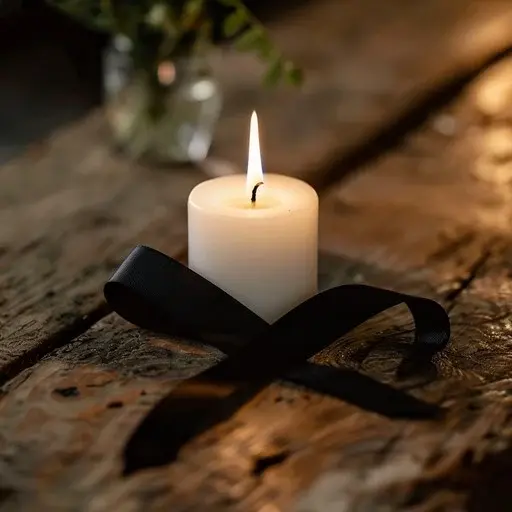
This month, my family experienced our own loss. The death of someone we love;
Jeremy.
It's hard to put into words what the past days, weeks, and month have been like.
So much time to grieve, to reflect, to feel, to connect, and to sit in absolute gratitude to have known a soul so great that his absence now causes such pain.
And then came that moment. The one so many of you will know.
🪷 The shock.
🪷 The heartbreak.
🪷 The quiet, disorienting question of: what does the world mean now?
That sudden, awful feeling of the rug being pulled from beneath your feet. The way time seems to hold its breath. The way you look around at ordinary things, a cup on the bench, the sound of traffic, the light coming through the window, and feel, somehow, that they shouldn't still be there. That the world should look different, because things are different now.
I share this with you not to worry you, but because I think it matters that you know: I am not separate from this experience. I am human, and I grieve too.
The strange tenderness of grieving as a grief counsellor
There is something strange and tender about moving through loss when grief is your life's work.
I sit with grief every day. I know the theories, the models, the frameworks, the research. I've heard hundreds of stories. I understand the neuroscience of what happens in the brain and body when we lose someone. I've carried my own losses before this one. And I have had the profound privilege of walking alongside others as they've carried theirs.
And yet.
Every loss is its own. No amount of knowledge changes that, and I wouldn't want it to. No two people grieve the same way, and each loss, even for the same person, asks something entirely different of us. I know this in my bones. I have said it to clients more times than I can count.
Right now, I am living it.
I found myself this month doing something I hear from so many of the people I work with: reaching for my phone to message family and friends, and finding that the words just weren't there. Not because I don't know what to say in grief, I do, professionally, theoretically, practically. But because this grief is mine. And in my grief, as in yours, words can fail.
I am okay. And I am also not okay. And both of those things are true at once.
Grief does not ask for our credentials
One of the things I most want people to understand about grief is that it does not discriminate. It does not ask whether you are a psychologist, a counsellor, a meditation teacher, or someone who has studied loss for decades. It does not offer exemptions based on how much you know.
Grief asks only one thing of us: that we feel it.
And that is not a weakness. That is not a failure of professional composure or personal resilience. It is, in fact, the most human thing there is.
I think sometimes people imagine that those of us who work in this space must be somehow buffered from it. That we have a set of tools that keeps us at a safe distance. I want to gently push back on that. The tools I have don't protect me from grief, they help me understand it, move with it, and care for myself within it.
There is a meaningful difference.
What my training and experience have given me is not immunity. It's a kind of accompaniment. I know how to notice what I'm carrying. I know how to ask for support. I know how to be in the depths of feeling without being swept away entirely, most of the time. And I know that even grief counsellors have days where the current is strong.
I am grateful for that knowledge right now. It means I am not afraid of the depth of what my loved ones and I are feeling. I can name it, sit with it, and trust that it will move, not away, but through.
What grief actually looks like (even for those who know it well)
In the days since Jeremy died, I have noticed grief doing what grief always does. It has not been tidy. It has not looked like the stages in any textbook. It has been layered, and contradictory, and full of unexpected moments.
Laughter alongside tears. Stories that make you ache and lift you up at the same time. Gratitude so large it almost overwhelms you, gratitude that this person existed, that you knew them, that they left a mark so significant that the pain of their absence feels proportionate to the love.
This is what grief looks like when someone has mattered deeply. The pain and the love are the same thing, seen from different angles.
There have been moments of stillness where I've felt close to Jeremy, in a memory, a shared joke I've recalled, the thought of him. Grief theorists call this a continuing bond, the ongoing relationship we maintain with those who have died, not as a sign that we are stuck, but as a natural and healthy expression of enduring love. Those moments have been gifts.
And there have been harder moments, too. Moments of raw absence. Moments of this grief touching on grief from the past. The remembering. The ache for family closer to him, so deeply impacted now and forever more. The future that has been altered.
All of it is grief. All of it is love.
The importance of our common humanity
I share all of this because I believe deeply in what I call our common humanity, the thread that connects every person reading these words, regardless of who you are, what you do, or what loss you carry.
We all lose people we love. We all know, or will know, the weight of this particular kind of grief. And so often, when we are in the middle of it, we feel isolated. We feel like perhaps we are grieving wrong, or too much, or not enough. We wonder why we are coping when we feel we shouldn't be, or struggling when we think we should have moved on.
I want to say clearly, and from experience both professional and personal: there is no right or wrong way to grieve.
There is no timeline you are behind. There is no emotion that is too much or too shameful. There is no right sequence of feelings to move through. Grief is as individual as the person who is grieving, and as unique as the relationship that has been lost.
What I hope, more than anything, is that you might read this and feel a little less alone in whatever you are carrying.
On caring for ourselves when we grieve
In the weeks and months ahead, I will be intentional about how I care for myself.
Not because I am a professional who must maintain capacity, though that matters too, but because I am a person who is grieving and who deserves the same gentleness I would offer anyone else.
I know what that looks like for me. Time with family, time in nature. Honest conversations with people I trust. Allowing myself to feel what comes up without rushing to resolve it. Being patient with the days that feel heavier than others. And being willing to reach out for support when I need it.
These are not complicated acts. But they are necessary ones.
If you are grieving right now, whether that grief is fresh or long-carried, whether it has been acknowledged by the people around you or felt in quiet, unwitnessed ways, I want to encourage you in the same direction. You are allowed to rest. You are allowed to ask for help. You are allowed to grieve imperfectly, and slowly, and in whatever way this loss is asking of you.
Grief is not something to be managed into submission. It is something to be moved through, gently, with support, and with compassion for yourself along the way.

For Jeremy
We love you, Jeremy.
I hope you're having a beer, a laugh, and a cuddle somewhere with Geoff.
If you're grieving right now and feel you could use some support, I'd gently encourage you to reach out, whether to someone you trust or to a professional who can walk alongside you. You don't have to carry this alone.
🪷 And wherever you are in your grief today: please go gently. 🪷


Comments